You are an agile project manager leading a team that is used to waterfall. The project sponsor wants to plan the entire project upfront so they can see when it will be delivered. You tell them that agile uses adaptive planning. Why might this be a better alternative?
What Is Not the Answer?
Adaptive planning does not necessarily allow the project sponsor to adapt to the project plan over time. We want the project plan to adapt to customer requirements.
It does not ensure that users can adapt to the products delivered by the team. Users do not need to adapt. The product should adapt to what the users or customers want.
It is not about the team overhearing conversations in a common area. That is osmotic communication, a separate agile principle.
What It Actually Is
Adaptive planning allows the team to deliver usable features incrementally while continually re-prioritizing the next pieces based on business needs.
Why This Is Better
Traditional waterfall planning locks in requirements upfront. You plan everything, build everything and deliver everything at the end. But here is the problem. Business needs change. Market conditions shift. Customers learn what they actually need when they see working software rather than looking at requirements documents.
Adaptive planning solves this by delivering usable features early. Instead of waiting months or years for everything to be finished, users see working features in weeks. They can use them immediately.
Prioritizing based on current business value: Instead of building features in the order they were planned, you build the features that deliver the most value right now. As business priorities shift, you re-prioritize accordingly.
Responding to feedback: When users work with features, they provide feedback. You incorporate that feedback into the next iteration rather than being locked into a rigid plan.
Reducing risk: If business conditions change dramatically, you are not stuck with a plan that no longer makes sense. You adapt.
The Conversation with Your Sponsor
Tell your sponsor that adaptive planning means you can show them working features regularly and adjust direction based on what is actually delivering value. This is better than a fixed plan that may no longer reflect business reality by the time delivery arrives.
– David McLachlan
You can see what people are saying about David McLachlan here: REVIEWS
Navigate to Free Project Management and Leadership Articles through the links on the right (or at the bottom if on Mobile)







Also available are my Project Management Templates – they’re a great way to save 100s of hours when you’re first starting out:
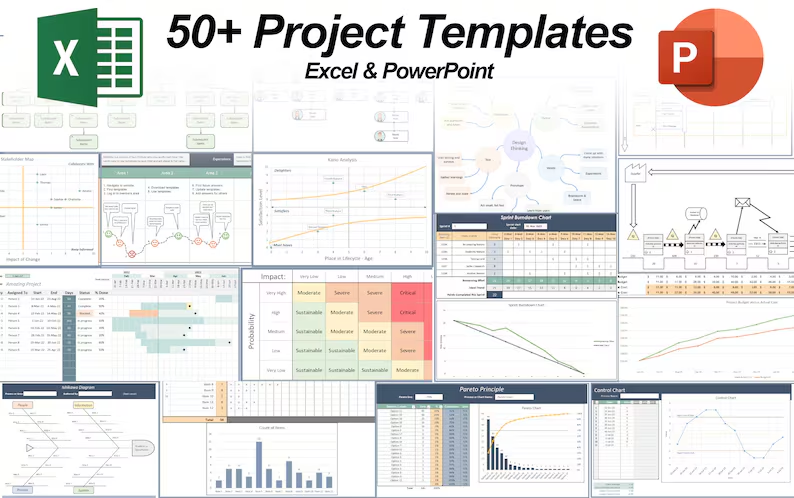 50+ Project Management Templates in Excel and PowerPoint (Excel Gantt Chart, Risk Matrix, RACI, Stakeholder Matrix and more!) 50+ Project Management Templates in Excel and PowerPoint (Excel Gantt Chart, Risk Matrix, RACI, Stakeholder Matrix and more!) |
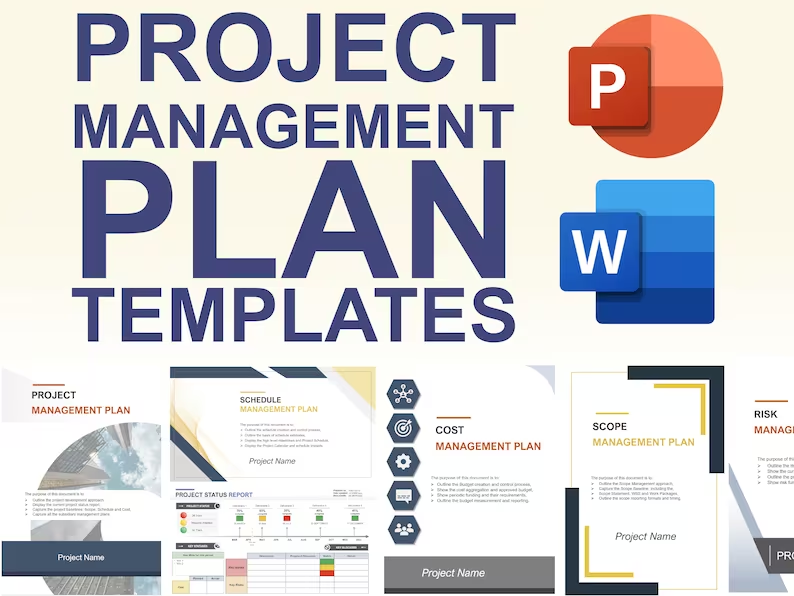 Pre-made Project Management Plan Templates: Save 100 HOURS! Pre-made Project Management Plan Templates: Save 100 HOURS! |