PMI has made a significant change to their study materials and if you are preparing for your CAPM or PMP this year, you need to know about it.
PMI Removed Key Guides and Standards
Previously, there were several guides available for study. The Process Groups: A Practice Guide showed the step-by-step process for managing a project. The PMBOK Guide 6th edition was very similar (almost identical) to this, and it was the perfect way to learn about project management. The PMBOK Guide 7th edition was also available, and provided a nice overview of project management and comprehensive references of tools, methods and artifacts. These were the standard study materials for PMP candidates.
Now, if you go to PMI’s website and search for any of these previous guides, including the PMBOK Guide 7th edition, you will find only one result: the search redirects directly to the PMBOK Guide 8th edition. PMI has removed the previous guides from their website entirely.
Why This Matters Specifically for CAPM Students
This is particularly significant for CAPM candidates because the CAPM Exam Content Outline (ECO) directly references the PMBOK Guide 7th edition and the Process Groups Practice Guide. These two guides are no longer available for purchase or download from PMI. Yet the exam is still based on them.
The Good News
There are two important pieces of good news to ease your concerns. First, the PMBOK Guide 7th edition and the Process Groups Practice Guide content is still covered in detail in comprehensive study courses, like my course on Udemy. You can still access this material as part of the course.
Second, the PMBOK Guide 8th edition contains essentially the same material as the previous 7th and 6th editions. The content is 90 to 95 percent identical between the PMBOK Guide 8th edition and the earlier guides including the Process Groups Practice Guide and PMBOK Guide 7th edition. The process is almost the same, and the key concepts and tools are also almost the same.
The Core Content Remains the Same
Both old and new editions follow the same fundamental structure:
Initiating a project, Planning the work, Executing the plan, Monitoring and Controlling performance and Closing the project.
The same project management processes appear in both. Scope management, scheduling, cost estimation and budgeting work the same way. Quality management, risk management, stakeholder management and communications all follow the same principles.
The knowledge areas and process groups are organized slightly differently in the 8th edition but the core content you need to know remains constant.
What You Should Do (CAPM and PMP)
Study the PMBOK Guide 8th edition. It contains everything you need for both the CAPM and PMP exams. You are not at a disadvantage by studying the newer edition. The fundamentals of project management have not changed.
If you have access to the previous editions through other sources, they are excellent supplements. But the 8th edition is sufficient on its own.
PMI’s move to consolidate on the 8th edition makes sense. It simplifies their product line and ensures all candidates study from the same primary source.
Projects are everywhere and the world needs good project leaders. By studying the right material, understanding project management principles and putting in consistent effort, you will pass your CAPM or PMP exam. Study with focus, practice with discipline. I believe in you.
– David McLachlan
You can see what people are saying about David McLachlan here: REVIEWS
Navigate to Free Project Management and Leadership Articles through the links on the right (or at the bottom if on Mobile)








Also available are my Project Management Templates – they’re a great way to save 100s of hours when you’re first starting out:
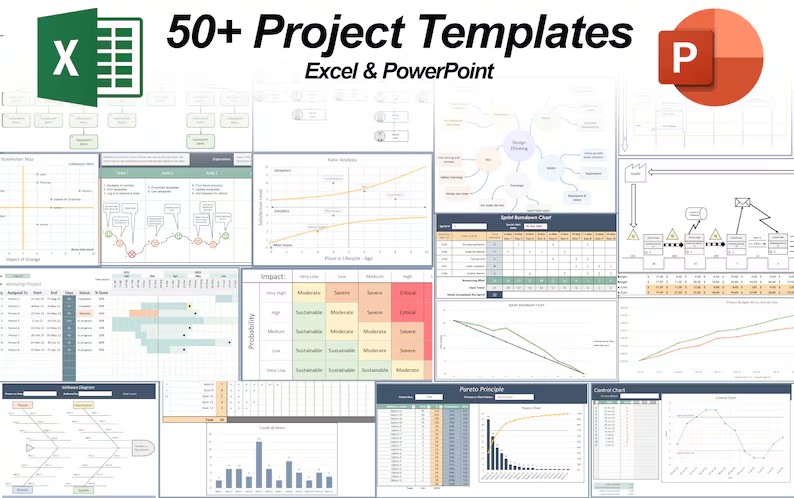 50+ Project Management Templates in Excel and PowerPoint (Gantt Chart, Risk Matrix and more!) 50+ Project Management Templates in Excel and PowerPoint (Gantt Chart, Risk Matrix and more!) |
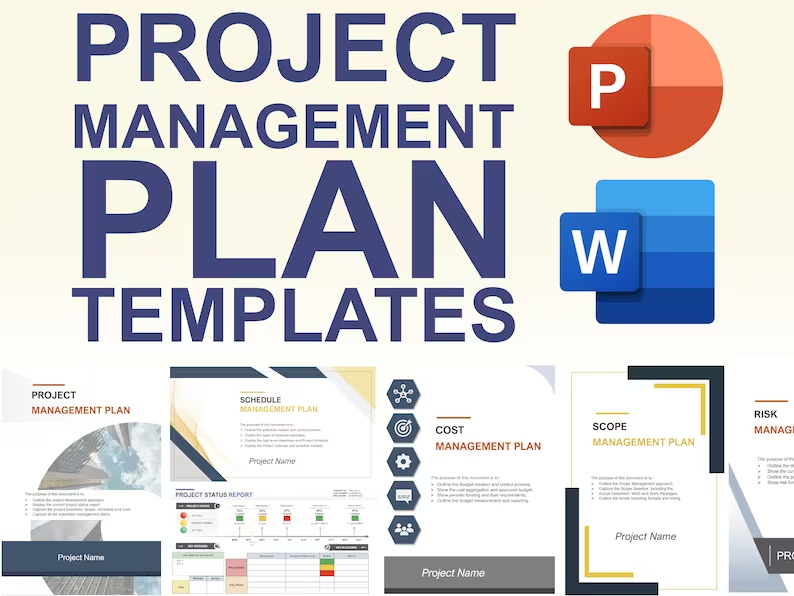 Pre-made Project Management Plan Templates: Save 100 HOURS! Pre-made Project Management Plan Templates: Save 100 HOURS! |