Studying for the PMP is genuinely difficult. But recent neuroscience research offers real encouragement for your journey.
What Happens in Your Brain
When you do hard things, a specific part of your brain actually grows. It is called the anterior cingulate cortex and it sits in your prefrontal cortex. This region controls planning, executive function and delayed gratification.
The Muscle Analogy
Think of your anterior cingulate cortex like a muscle. When you do push-ups, you do reps and the muscle gets stronger. Similarly, when you push through difficult tasks like PMP study sessions, this brain region actually gets bigger and stronger.
The Compounding Effect
As you keep doing hard things, your brain adapts. Each study session makes it easier to focus on the next one. Each practice exam builds your capacity. You are literally training your brain to handle difficult things more effectively.
What This Means for You
Every time you feel the study is hard and you push through it, you are building something and your brain is getting stronger. The next difficult task will feel slightly easier because you are putting in the reps.
So keep studying. Yes, it is hard. But with every rep, you are getting stronger and closer to passing your PMP exam.
– David McLachlan
You can see what people are saying about David McLachlan here: REVIEWS
Navigate to Free Project Management and Leadership Articles through the links on the right (or at the bottom if on Mobile)








Also available are my Project Management Templates – they’re a great way to save 100s of hours when you’re first starting out:
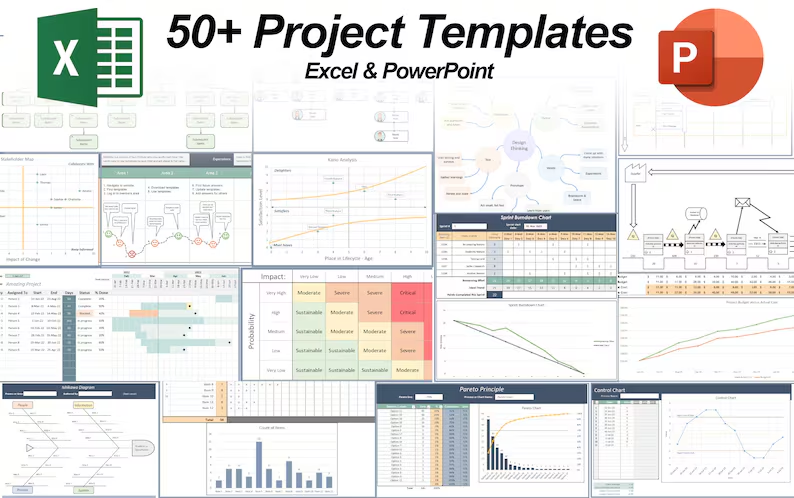 50+ Project Management Templates in Excel and PowerPoint (Excel Gantt Chart, Risk Matrix, RACI, Stakeholder Matrix and more!) 50+ Project Management Templates in Excel and PowerPoint (Excel Gantt Chart, Risk Matrix, RACI, Stakeholder Matrix and more!) |
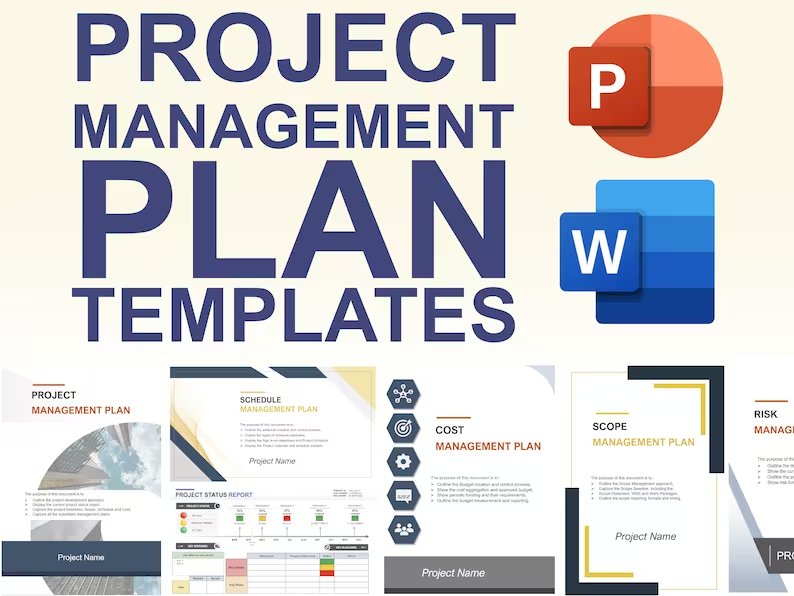 Pre-made Project Management Plan Templates: Save 100 HOURS! Pre-made Project Management Plan Templates: Save 100 HOURS! |