Category Archives: Project Management

Can you pass the PgMP? (Questions 1 to 10)

We use the PMP Fast Track to answer PMP questions quickly and easily. Check it out!

Question 1 – Managing Escalating Risks Your program team is overwhelmed with hundreds of new risks every day and other parts of the program are starting to suffer as a result. What should you do?

Question 2 – The Role of the Governance Board You have created the business case and program charter and are ready to initiate the program. What is the governance board’s primary role at this stage?

Question 3 – Sharing a Sensitive Stakeholder Register Your stakeholder register contains thousands of names along with pay, performance and living arrangements. An executive in another office requests access to it. What should you do?

Question 4 – Which Document Is This? You are presenting to the program governance board with a document that lists planned benefits, their status and key performance indicators. Which document is this?

Question 5 – How Is Program Success Measured? Your large multinational factory program is nearing completion and the last project is handing its deliverables to operations. How should you measure the success of the program?

Question 6 – Transitioning Components to Operations The first two components of your program are ready to transition to operations. What is the correct approval process?

Question 7 – Who Maintains the Change Record? During a stage gate review, two major changes are approved by the program steering committee. Who is responsible for maintaining the record of the proposed change, its rationale and its outcome?

Question 8 – Balancing Short-Term Demand Against Long-Term Benefits Several component projects are requesting schedule acceleration to meet rising public demand, but doing so would reduce funding available for later components and long-term benefits realization. What should you do?

Question 9 – Approved Change Affecting Multiple Components An approved change will affect multiple interdependent component projects in your program. What should you do next?

Question 10 – Capturing Regulatory Obligations Your program is highly regulated and you must ensure all quality requirements and external regulatory obligations are captured early in the program definition phase. Where should these be documented?

Pep Talk

Ten PgMP questions down. Program management thinks differently from project management and these questions show exactly how. If you worked through all ten, you are building the right instincts for the exam. Keep going.

– David McLachlan

You can see what people are saying about David McLachlan here: REVIEWS

Navigate to Free Project Management and Leadership Articles through the links on the right (or at the bottom if on Mobile) 
PMI PMP 35 PDUs CourseThe Ultimate PMP Project Management Prep Course (35 PDUs)
Agile Certified Practitioner (PMI-ACP 28 PDUs)The Complete PMI-ACP Course: (28 PDUs) 
PgMP Program Management CourseLearn Program Management – the PgMP Prep Course
Full PMP Exams to Pass on the First TryFour Full PMP Practice Exams (180 Qs each) to pass your PMP on the First Try!
Scrum Master Course PSMScrum Master Course (PSM)
Product Owner Course PSPOProduct Owner Course (PSPO)
Business Analyst CourseBusiness Analyst Course

Also available are my Project Management Templates – these don’t have a coupon code but they’re a great way to save 100s of hours when you’re first starting out:

50 Project Management Templates Gantt Chart Risk Matrix and more Excel50+ Project Management Templates in Excel and PowerPoint (Gantt Chart, Risk Matrix and more!)
Project Management Plan TemplatesPre-made Project Management Plan Templates: Save 100 HOURS!


How One Person Passed Six PMI Certifications in Six Months

Is it possible to pass six certifications in six months? One person did exactly that, and shared every tip and resource that got him there.

The certifications, completed in order, were the PMP, ACP, PBA (Professional in Business Analysis), RMP (Risk Management Professional), PgMP (Program Management Professional) and PfMP (Portfolio Management Professional). His motivation was a career pivot from the military into the corporate world, achieved without an MBA and without prior corporate experience. On every exam he scored above target overall.

Two Tips That Applied to Every Certification

The first was to read, reread and keep reading the Exam Content Outline (ECO) for each certification. These are available free from PMI’s website. The language in the ECO appears throughout the exams and also guides your study in the right direction. If your reference material matches the ECO, you are on the right track.

The second was documenting project management experience clearly and deliberately. He maintained a master resume with detailed notes from his ten years of leadership roles, writing results-oriented summaries tied directly to each ECO. Strong action verbs, quantifiable outcomes and a focus on strategic impact and decision making. Each application was tailored to the specific certification he was pursuing.

Month by Month

Month 1: PMP. He completed the required 35 contact hours using PMI’s authorized on-demand prep before moving to more cost-effective Udemy courses. He studied both the PMBOK Guide Sixth and Seventh Editions and used PMI Study Hall for practice exams.

Month 2: ACP. The education requirement at the time was 21 hours (now 28). He again used PMI’s authorized prep for education hours and named PMI Study Hall as the single most valuable prep tool for this exam. The Agile Practice Guide was his primary reference.

Month 3: PBA. He found a Udemy course by Muhammad Elhoot for the education requirement and used the PMI PBA Certification Study Guide (Second Edition) by Elizabeth Larsen as his primary study resource. Five days of access to an online practice question bank was enough to get through everything with focused effort. He also skimmed several PMI guides including the Guide to Business Analysis and the Benefits Realization Management Practice Guide.

Month 4: RMP. He needed 30 PDUs of risk management education and used a Udemy course to satisfy that requirement. His core prep came from the Risk Management in Portfolios, Programs and Projects Practice Guide from PMI and PMI Study Hall practice exams.

Month 5: PgMP. The Standard for Program Management Fifth Edition was his primary reference and the foundation the exam is built on. He used two Udemy practice exam courses by Allah Sultan, both closely aligned with the real exam and citing rationale directly from the fifth edition with page numbers.

Month 6: PfMP. He used the Standard for Portfolio Management Third Edition as his foundation. PMI lists the fourth edition on their site but he notes the third is still the most relevant resource for the exam as of mid-2025. He read the fourth edition for additional context but did not rely on it. Practice exams again came from Allah Sultan’s Udemy course.

Six certifications, six months, above target on every exam. The formula was consistent: know the ECO, match your experience to it, use the right primary reference for each exam and practice until you are confident. If one person can do it, the path is there for others to follow.

– David McLachlan

You can see what people are saying about David McLachlan here: REVIEWS

Navigate to Free Project Management and Leadership Articles through the links on the right (or at the bottom if on Mobile) 

PMI PMP 35 PDUs CourseThe Ultimate PMP Project Management Prep Course (35 PDUs)
Agile Certified Practitioner (PMI-ACP 28 PDUs)The Complete PMI-ACP Course: (28 PDUs) 
PgMP Program Management CourseLearn Program Management – the PgMP Prep Course
Full PMP Exams to Pass on the First TryFour Full PMP Practice Exams (180 Qs each) to pass your PMP on the First Try!
Scrum Master Course PSMScrum Master Course (PSM)
Product Owner Course PSPOProduct Owner Course (PSPO)
Business Analyst CourseBusiness Analyst Course

Also available are my Project Management Templates – these don’t have a coupon code but they’re a great way to save 100s of hours when you’re first starting out:

50 Project Management Templates Gantt Chart Risk Matrix and more Excel50+ Project Management Templates in Excel and PowerPoint (Gantt Chart, Risk Matrix and more!)
Project Management Plan TemplatesPre-made Project Management Plan Templates: Save 100 HOURS!


PMP vs PgMP: What Is the Difference and Is It Worth the Upgrade?

If you already have your PMP, program management is a natural next step. Here is everything you need to know to decide whether the PgMP is the right move.

The Salary Difference

According to PMI’s Earning Power Report, the average US salary for a PMP holder is $135,000. PgMP holders earn around 10% more at $146,000. That gap alone makes it worth considering if you have the experience to qualify.

What Each Certification Represents

The PMP demonstrates project management expertise. It shows you can lead individual projects through initiation to closing with at least three years of experience behind you.
The PgMP positions you as a leader capable of managing multiple related projects as a unified program, delivering sustained business value across an organization. It is a step up in both scope and seniority.

Application Requirements

For the PMP you need either a high school diploma with five years of project management experience or a bachelor’s degree with three years, plus 35 contact hours of project management education.

The PgMP requirements are more involved. You need four years of project management experience or a current PMP. On top of that you need program management experience: seven years with a high school diploma, four years with a bachelor’s degree or three years with a master’s degree.

The Exam

The PMP has 180 questions to be completed in 230 minutes, roughly one answer every 75 seconds. It covers people, process and the business environment.

The PgMP has 170 questions with 240 minutes to complete them, giving you slightly more time per question at around 84 seconds each. Only 150 questions are scored and 20 are unscored test questions for future exams. The content covers strategic program management, the program life cycle (initiating, planning, executing, controlling and closing), benefits management, stakeholder management and governance.

Cost

The PMP costs $405 for PMI members or $655 without membership. The 35 contact hours of education are also required and can be completed through PMI, Udemy or other providers.

The PgMP costs $800 for PMI members or $1,000 without. There is no contact hours requirement for the PgMP. The focus is entirely on demonstrating program management experience.

What to Study

For the PMP the core resources are the Exam Content Outline, the PMBOK Guide, the Process Groups Practice Guide and the Agile Practice Guide.

For the PgMP the approach is similar. Download the PgMP Exam Content Outline free from PMI’s website as your study guide. Then work through the Standard for Program Management Fifth Edition and the PMBOK Guide. The PMBOK Guide is currently in its eighth edition.

If you have been managing programs for several years and want credentials that reflect that, the PgMP is a well-recognized way to demonstrate it. The experience requirements are substantial but so is the return.

– David McLachlan

You can see what people are saying about David McLachlan here: REVIEWS

Navigate to Free Project Management and Leadership Articles through the links on the right (or at the bottom if on Mobile) 

PMI PMP 35 PDUs CourseThe Ultimate PMP Project Management Prep Course (35 PDUs)
Agile Certified Practitioner (PMI-ACP 28 PDUs)The Complete PMI-ACP Course: (28 PDUs) 
PgMP Program Management CourseLearn Program Management – the PgMP Prep Course
Full PMP Exams to Pass on the First TryFour Full PMP Practice Exams (180 Qs each) to pass your PMP on the First Try!
Scrum Master Course PSMScrum Master Course (PSM)
Product Owner Course PSPOProduct Owner Course (PSPO)
Business Analyst CourseBusiness Analyst Course

Also available are my Project Management Templates – these don’t have a coupon code but they’re a great way to save 100s of hours when you’re first starting out:

50 Project Management Templates Gantt Chart Risk Matrix and more Excel50+ Project Management Templates in Excel and PowerPoint (Gantt Chart, Risk Matrix and more!)
Project Management Plan TemplatesPre-made Project Management Plan Templates: Save 100 HOURS!


Microsoft Project: From Beginner to Expert in One Session

More than 20 million people use Microsoft Project to manage their projects, including teams at Coca-Cola and hundreds of other Fortune 500 companies. If you have been meaning to get up to speed, here is everything you need to know to build a real project plan from scratch.

Setting Up Your Project

When you open a new blank project, the first thing to do is switch tasks from manual to automatic scheduling. You will find this toggle at the bottom of the screen. It saves a lot of pain later. While you are at it, right-click the Gantt chart area and add light gridlines under Grid Lines to make the chart easier to read.

Building Your Work Breakdown Structure

Start by entering your high-level features in the task name column. Once those are in, right-click to insert tasks underneath each feature and indent them using the indent button in the task tab. This creates your work breakdown structure: features at the top level with their individual tasks nested below.

Add an overall project name at the very top and indent everything beneath it. Microsoft Project will then calculate a total project duration automatically. Color-coding your feature rows makes the structure easier to read at a glance.

Adding Durations and Linking Tasks

Enter duration estimates against each task. As you do, the Gantt chart starts to populate on the right. To bulk-edit tasks with the same duration, select them, go to Task and then Information and apply the duration across all of them at once.

Once durations are in, select all tasks and click Link Selected Tasks. This sequences them from finish to start and gives you a realistic overall project duration. You can then adjust individual dependencies by double-clicking the arrows between tasks and choosing from finish to start, start to start or finish to finish. Leads and lags can be added here too: a positive number adds lag and a negative number brings a task forward.

To mark a release or key milestone, insert a task and set its duration to zero. A diamond will appear on the Gantt chart.

Critical Path and Slack

Go to Gantt Chart Format and select Critical Tasks to highlight the tasks that directly affect your end date. Add the Slack option to see where there is wiggle room. If you want a network diagram view instead of the Gantt chart, right-click the left panel and switch to Network Diagram. Red boxes indicate critical path tasks.

Resources and Cost

Right-click the left panel and open the Resource Sheet. Add your team roles as work resources with hourly rates. Physical items like computers and desks are added as material or cost resources with a fixed rate.

Once resources are set up, double-click any task and go to the Resources tab to assign people and set their allocation. Four developers on one task is entered as 400%.
When your plan is complete, go to Project and Set Baseline. This locks in your original plan so that any future changes can be tracked against it. Microsoft Project will always show you where you stand versus where you started.

– David McLachlan

You can see what people are saying about David McLachlan here: REVIEWS

Navigate to Free Project Management and Leadership Articles through the links on the right (or at the bottom if on Mobile) 

PMI PMP 35 PDUs CourseThe Ultimate PMP Project Management Prep Course (35 PDUs)
Agile Certified Practitioner (PMI-ACP 28 PDUs)The Complete PMI-ACP Course: (28 PDUs) 
50 Project Management Templates Gantt Chart Risk Matrix and more Excel50+ Project Management Templates in Excel and PowerPoint (Gantt Chart, Risk Matrix and more!)
Project Management Plan TemplatesPre-made Project Management Plan Templates: Save 100 HOURS!
PgMP Program Management CourseLearn Program Management – the PgMP Prep Course
Full PMP Exams to Pass on the First TryFour Full PMP Practice Exams (180 Qs each) to pass your PMP on the First Try!
Scrum Master Course PSMScrum Master Course (PSM)
Product Owner Course PSPOProduct Owner Course (PSPO)
Business Analyst CourseBusiness Analyst Course


Four Ways to Recover a Failing Project

Every project manager has experienced a project going off the rails. Here are four reasons  I’ve seen projects fail, over and over again, and what to do about each of them.

1. Disruptive Noise

When a project starts to struggle, the stakeholders around it get “loud”. Executives start poking around, stakeholders start asking more questions – and rightly so because they sense that something isn’t quite right. But the increased scrutiny creates a cycle that disrupts the project further. They might replace key people that you need, or they might even make some decisions that you know will have a negative effect.

The fastest way to break the cycle of “disruptive noise” is to deliver small, early wins.

Break the project into smaller pieces and showcase something real as soon as possible. A working prototype, a test environment delivery or a completed milestone. Follow it up with a clear communication far and wide – to the right people showing what has been achieved.

Speaking of the right people: check the organizational chart. Missing a high-influence stakeholder is one of the most common ways projects run into trouble. Identifying and engaging them early prevents much bigger problems later.

2. No Resources or Authority

Being asked to deliver a project without the funding or access to make it happen is a situation that catches many project managers off guard. The fix is to get commitment in writing before work begins.

A signed project charter that includes the project sponsor’s commitment to funding and resources is not just a formality. It is a forcing function. If a sponsor is not willing to commit resources to paper, that tells you something important before you have spent months working toward a goal that was never properly supported.

3. Unrealistic Timeframes

An executive wants it done in two months. The people doing the work say six months. This is one of the most universal project management experiences there is.

Always get estimates from the people actually doing the work, not from the people requesting it. Use ranges rather than single-point estimates, especially early in the project when complexity is highest. Experienced project managers on large construction projects routinely build in a 40% contingency. Things change over one to two years in ways that cannot be fully anticipated at the start.

If the pressure for an unrealistic timeframe continues, raise it formally as a risk. Document the potential impacts: reduced scope, increased cost or both. Assign an owner to that risk. Often the right owner is the executive applying the pressure in the first place. Once the risk is documented and assigned, everyone is on the same page if things deteriorate further.

4. Frequent Change Requests

Constant changes to scope are usually a symptom of unclear scope from the start. The solution is to get specific about what is being delivered before work begins.

Involve subject matter experts and break the work down into a work breakdown structure. Prototypes, wireframes, storyboards and process maps are all useful tools for making the scope visible and testable early. The more concrete the picture of what is being delivered, the less room there is for misalignment later.

When change requests do come in, make the impacts transparent. Every change affects the triple constraint: scope, schedule and cost. If someone wants to add something, show them exactly what it will cost in time and money. When the person requesting the change understands the tradeoffs, the conversation becomes much more straightforward.

None of these problems are unusual. Most experienced project managers have encountered all four. The difference between a project that recovers and one that does not usually comes down to how quickly the root cause is identified and addressed.

– David McLachlan

You can see what people are saying about David McLachlan here: REVIEWS

Navigate to Free Project Management and Leadership Articles through the links on the right (or at the bottom if on Mobile) 

PMI PMP 35 PDUs CourseThe Ultimate PMP Project Management Prep Course (35 PDUs)
Agile Certified Practitioner (PMI-ACP 28 PDUs)The Complete PMI-ACP Course: (28 PDUs) 
50 Project Management Templates Gantt Chart Risk Matrix and more Excel50+ Project Management Templates in Excel and PowerPoint (Gantt Chart, Risk Matrix and more!)
Project Management Plan TemplatesPre-made Project Management Plan Templates: Save 100 HOURS!
PgMP Program Management CourseLearn Program Management – the PgMP Prep Course
Full PMP Exams to Pass on the First TryFour Full PMP Practice Exams (180 Qs each) to pass your PMP on the First Try!
Scrum Master Course PSMScrum Master Course (PSM)
Product Owner Course PSPOProduct Owner Course (PSPO)
Business Analyst CourseBusiness Analyst Course


PMP Project Management Course Specials for May 2026

If you’re looking for a fast, cheap and enjoyable way to study project management this year, you can get my courses at a VERY low price with the coupon code:

  • MAY2026

Only during May 2026 😊 It’s a great way to get PDUs – ranging from 10 to 35 PDUs in one go, to help you renew your PMP or other PMI Certification.

Here are the courses:

PMI PMP 35 PDUs CourseThe Ultimate PMP Project Management Prep Course (35 PDUs)
Agile Certified Practitioner (PMI-ACP 28 PDUs)The Complete PMI-ACP Course: (28 PDUs) 
PgMP Program Management CourseLearn Program Management – the PgMP Prep Course
Full PMP Exams to Pass on the First TryFour Full PMP Practice Exams (180 Qs each) to pass your PMP on the First Try!
Scrum Master Course PSMScrum Master Course (PSM)
Product Owner Course PSPOProduct Owner Course (PSPO)
Business Analyst CourseBusiness Analyst Course

Also available are my Project Management Templates – these don’t have a coupon code but they’re a great way to save 100s of hours when you’re first starting out:
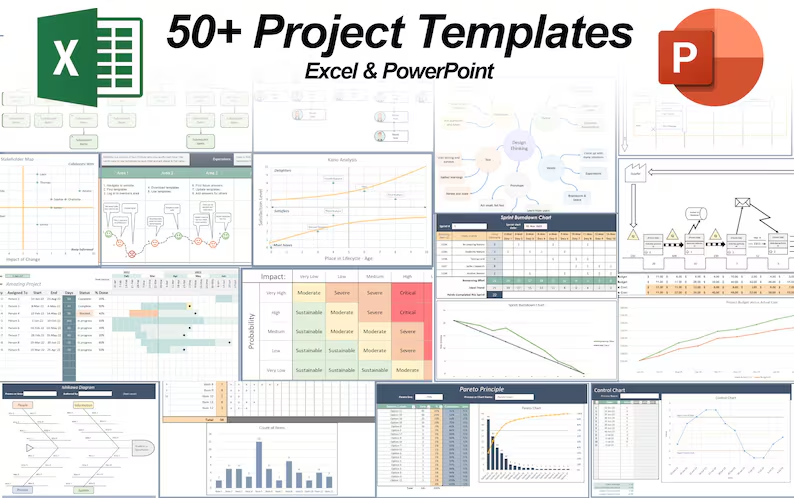
50 Project Management Templates Gantt Chart Risk Matrix and more Excel50+ Project Management Templates in Excel and PowerPoint (Gantt Chart, Risk Matrix and more!)
Project Management Plan TemplatesPre-made Project Management Plan Templates: Save 100 HOURS!

– David McLachlan